Residue: What Remains & Exposed After the Pull
Some paintings shout. Others whisper. And then there are pieces like Residue—a massive, double-paneled work that doesn’t say a word but leaves a lasting mark.

Measuring 10 feet wide by 6 feet tall, this diptych consists of two towering 5x6-foot canvases that, when combined, become a physical wall of layered history.

At that size, it doesn’t just hang in a room—it alters it. But what makes Residue truly unforgettable isn’t just its scale. It’s the sensation it gives off: the feeling that something once lived on its surface—and was ripped away.

The painting began with a base of black and grey, poured and layered to create a dark, almost industrial mood.

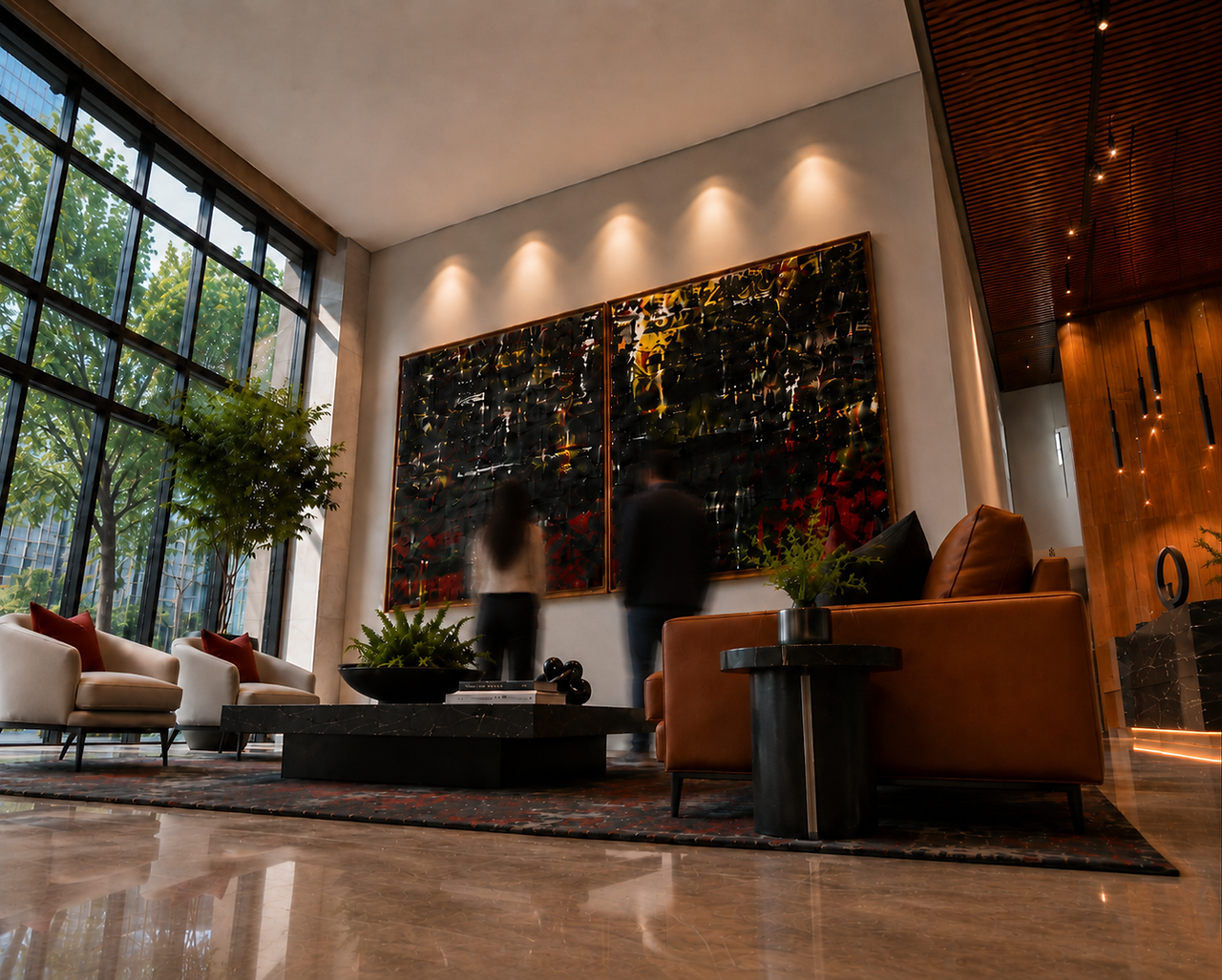

Over time, I scraped acrylic paint across the surface, embedding yellow and white into the mix, only to sand it back, drag tools across it, and build it again in epoxy resin.

The result is a canvas that looks torn, raw, and exposed—as if something adhesive, textured, or organic had been glued down and violently removed. What’s left is not just what was put there—but what was taken away.

There’s a tension in that. A memory of contact.
A suggestion of another object or story that existed before the current image ever came to be. Some areas are smooth and glassy, others are scraped back to a rough edge that feels like scabbing or scar tissue. It’s not precious—it’s personal. You don’t just look at Residue. You feel it.

Touch, in fact, is unavoidable. People reach for it instinctively. There’s something tactile and honest about its damage—something human in its surface.

Residue is about what’s left behind—emotionally, physically, and visually. It’s the imprint of experience. It doesn’t care to be perfect. It wants to be true.


